RV Windshield vs Car Windshield: Why They Are Not the Same Glass
An RV windshield differs from a car windshield in size, curvature, mounting method, and sourcing. Car glass is compact, glued in with urethane, and stocked almost everywhere. RV glass can span roughly 100 inches wide, comes in one-piece or two-piece designs, and may be held in by a rubber gasket instead of adhesive. It usually has to be ordered rather than pulled off a shelf, and the install needs a technician who works on recreational vehicles. Those gaps are why an RV windshield job looks nothing like a same-day car repair.
Pull a motorhome up next to your sedan and the windshield gives away just how different the two machines are. One pane fits under an arm. The other is a curved wall of glass wider than the car parked beside it. Size is only the start of it, though. The way the glass is shaped, held in, and ordered follows a whole separate rulebook, and most owners never learn those rules until a rock finds the glass somewhere out on Highway 14.
We work on both kinds of vehicles, and the same misunderstanding comes up again and again. RV owners expect the process to match the quick chip fix they got on their daily driver. It rarely does. Figuring out why starts with what actually sets recreational vehicle glass apart.
RV windshields use a laminated glass assembly with a polyvinyl butyral interlayer sandwiched between two glass panes. When only the outer layer is cracked, repair is often still possible. When the damage reaches the inner layer or the interlayer itself starts to separate, visible as a foggy or milky area around the break, no repair will restore structural integrity. That windshield needs to be replaced.
Start With Size and Shape
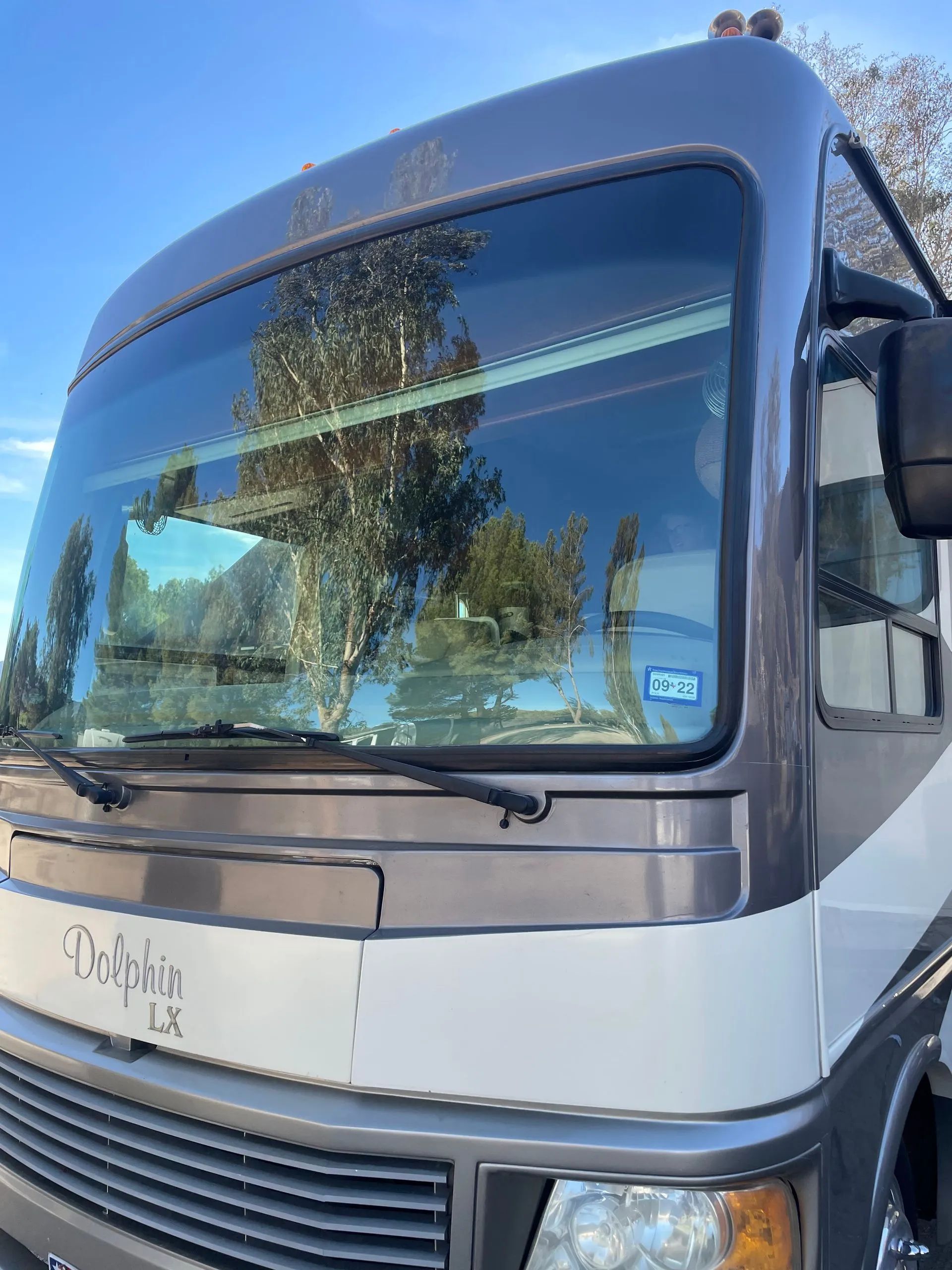
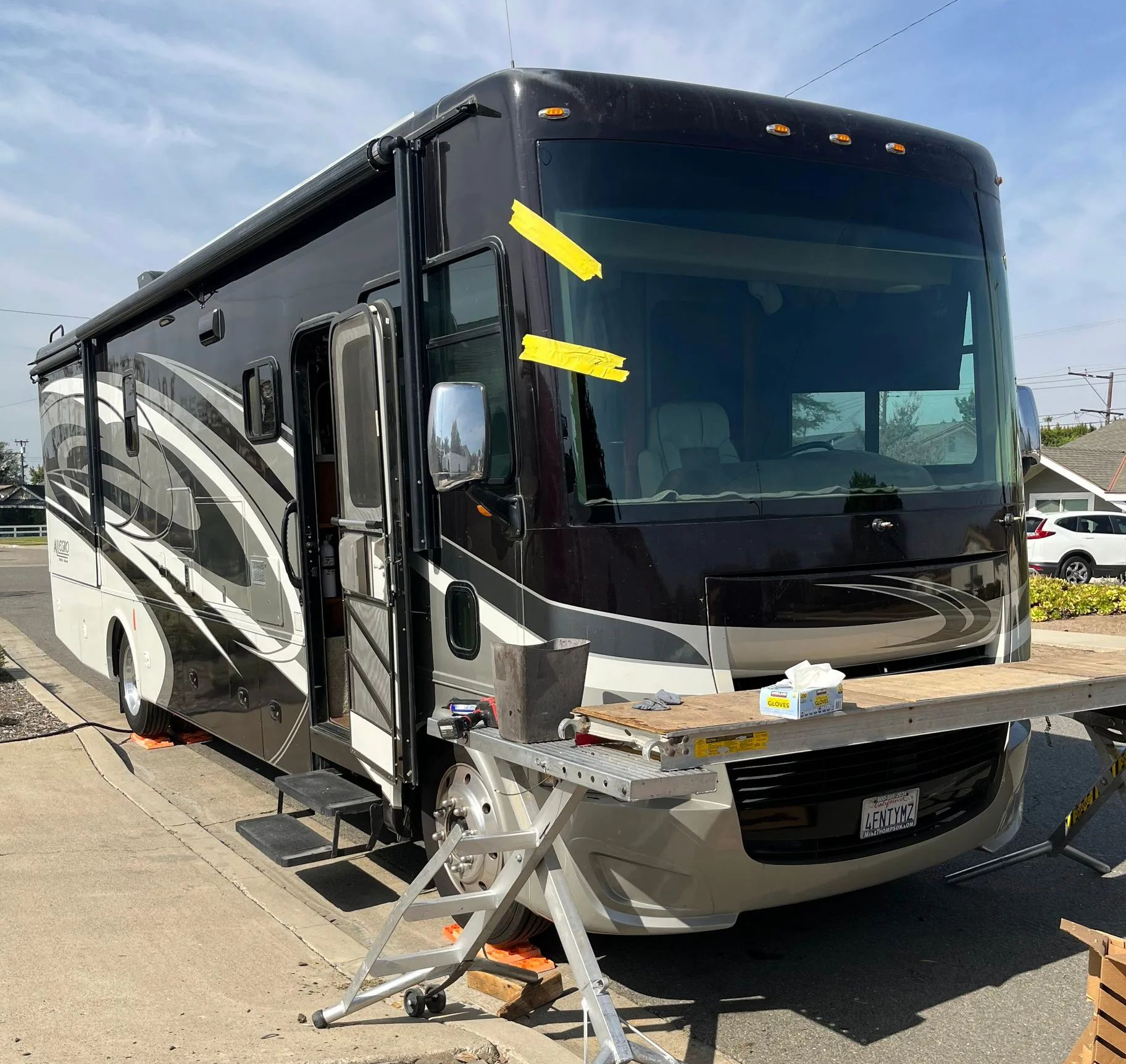
A car windshield is a modest thing. A few feet across, gently curved, stamped out by the thousand for one model year. RV glass plays a different game. A large motorhome pane can run about 45 inches tall and close to 100 inches wide, and it often wraps around the front corners of the coach instead of sitting flat.
That curve isn't just for looks. It changes how the glass carries load, how it seals to the body, even how you clean it. Owners of big coaches know the drill: a long-handled squeegee or a step ladder just to reach the top corners. No car owner thinks about that. Over-the-road trucks stick with flat windshields because they're easier to service, but RV builders love the sweeping curved face, and that shape adds trouble at every step of a replacement.
Size raises the stakes physically, too. A bigger pane holds more stress across its surface, so it reacts harder to heat swings, body flex, and impact. Around Lancaster and the wider Antelope Valley, glass bakes under a brutal afternoon sun and then cools fast once the desert night sets in. A small car pane shrugs that off. A wide RV pane, already carrying more internal stress, has far less room before a little chip decides to run.
RV windshields use a laminated glass assembly with a polyvinyl butyral interlayer sandwiched between two glass panes. When only the outer layer is cracked, repair is often still possible. When the damage reaches the inner layer or the interlayer itself starts to separate, visible as a foggy or milky area around the break, no repair will restore structural integrity. That windshield needs to be replaced.
One Piece or Two? A Design Split You Will Not Find on Cars
Cars come with one windshield. That's the whole story. RVs split into two camps, and which one you own shapes the entire job.
Two-piece (split) windshields
Plenty of motorhomes, especially mid-range coaches, use two separate panes divided by a narrow center post. The upside is real. When a rock cracks one side, you often replace only that half. The good pane stays put, the work is smaller, and the glass is easier to wrangle. Some builders also lean on the safety logic here, since a divided design keeps one side intact even if the other lets go.
One-piece windshields
Higher-end and newer coaches often run a single sweeping pane for that clean, unbroken view. It looks sharp. It's also a harder part to live with. One-piece glass is bulkier, more likely to break during handling, and leans hard on a well-built front cap to sit right. When the fit is off, these are the panes known for working loose over the years. And the viewing gain over a split design is smaller than people think, since the center post on a two-piece is only an inch or two wide.
Neither design wins outright. Reliability comes down to how well the glass was fitted and how square the coach body still is, not the pane count. But the design absolutely changes what a replacement takes, and it's a fork in the road that just doesn't exist for cars.
How the Glass Is Held In: Gasket-Set vs. Urethane-Bonded
Here's one of the biggest differences hiding in plain sight. Almost every modern car windshield is glued in. A bead of urethane bonds the glass straight to the frame, and that bond is part of the car's structure. RVs use two different systems, and knowing which one you have matters before anyone touches the glass.
Gasket-set windshields
A heavy rubber gasket mounts to the coach body, and the glass sets into a channel in that gasket. The rubber holds and seals the pane. These gaskets can last many years and often get reused, as long as they aren't torn or gone hard. Even so, a good install adds a primerless urethane sealant between the glass and the gasket to keep the pane from popping loose and to stop leaks.
Glue-in (urethane-bonded) windshields
Like a car, the glass bonds straight to the body with urethane, sometimes finished with a cosmetic molding around the edge. The adhesive does the real work, and using the correct, matched adhesive system is the single most important part of the job. Grab the wrong material and a wide, heavy pane can separate from the body.
TIP: TBefore you book any RV windshield work, find out whether your coach is gasket-set or glue-in, and if it's gasket-set, whether the gasket itself needs replacing. Sort that out early and the right parts and adhesives show up with the tech instead of turning into a surprise halfway through.
RV windshields use a laminated glass assembly with a polyvinyl butyral interlayer sandwiched between two glass panes. When only the outer layer is cracked, repair is often still possible. When the damage reaches the inner layer or the interlayer itself starts to separate, visible as a foggy or milky area around the break, no repair will restore structural integrity. That windshield needs to be replaced.
Class A, Class C, and Towables Each Sit Differently
"RV windshield" covers vehicles built in wildly different ways, and the glass follows.
Class A coaches ride on a bare chassis with a custom front cap, which is where those giant one-piece or two-piece panes live. This is the glass most people picture when they hear motorhome windshield. It's also the most specialized to replace.
Class C motorhomes are built on a cutaway van or truck cab, so the windshield in front of the driver is usually the original automotive pane from that donor chassis. So part of a Class C rig can take fairly standard truck-cab glass, while the living quarters behind it use RV-specific windows. That split throws a lot of owners.
Towables, meaning travel trailers and fifth wheels, have no windshield at all. They aren't driven. They still carry big front and side windows that eat the same road debris and sun, which is why glass care still matters even without a driver's seat.
Knowing your class tells a shop right away what part they're chasing and how the install will go. A Class C cab windshield and a Class A front pane are barely the same job.
The Structural Job an RV Windshield Does
The windshield on any vehicle is more than a window. It braces the front of the body, keeps weather out, and helps hold everything square. On an RV that role gets bigger, because the glass is so large and the space behind the dash is packed with cabinetry, wiring, and finishes worth protecting.
A poorly fitted RV windshield doesn't just weep a little. Water that sneaks past a bad seal can reach under-dash wiring, soak insulation, and grow mildew inside the coach. On the body side, glass bonded over hidden rust won't hold the way it should. That's why a careful shop grinds any corrosion on the bonding surface back to bare metal before setting new glass.
WARNING: Cracks that show up with no impact behind them, often called stress cracks, can point to a body that has flexed or twisted, sometimes from uneven use of the coach leveling system. If a fresh crack spreads across your RV glass and there's no rock to blame, treat it as a reason to have the whole front end checked, not just the pane swapped.
Sourcing and Lead Time: Why RV Glass Is Not a Same-Day Part
This is where car-repair expectations fall apart the hardest. A common car windshield is a stocked commodity. Many shops keep the popular sizes on hand and turn a replacement around in an afternoon. RV glass almost never plays out that way.
Recreational vehicle windshields are low-volume, model-specific parts. The right pane for your coach may need to be ordered, and the fit has to be checked against a body that might have drifted slightly out of square after years of travel and vibration. Most general auto-glass shops are set up for cars and light trucks and simply won't touch motorhome installs, because the panes are large, awkward, and unforgiving.
The install runs longer to finish safely, too. Once a glue-in windshield is set, the adhesive needs cure time before the coach moves, often several hours, following the specific drive-away time for the system used. Rush that window and you've undone the whole point of a proper bond. Planning around lead time and cure time is just part of RV ownership, not a sign anything went wrong.
Desert driving stacks one more thing onto sourcing. Around the Antelope Valley, sun and heat hammer parked coaches, and open stretches of highway throw gravel that chips glass on the regular. Owners out here need RV glass work more often than someone tucking a rig into a garage in a mild coastal town. Knowing your options before the crack spreads is worth more than it sounds.
Frequently Asked Questions
Is RV windshield glass made differently from car glass?
Both use laminated safety glass, with a plastic layer between two sheets so the pane holds together when it breaks. The core material is similar. The difference is scale and shape, since RV panes are far larger and often curved.
Can any auto glass shop replace an RV windshield?
Not reliably. Most auto-glass shops focus on cars and light trucks and aren't equipped for the size, weight, and mounting systems of motorhome glass, especially large one-piece Class A panes needing gasket-set or glue-in expertise.
Why does my RV windshield have two pieces when my car has one?
Many motorhomes use a two-piece, split windshield divided by a center post, letting a shop swap only the damaged half. Other coaches run a single one-piece design for a cleaner look. Cars don't scale that way.
How long should I expect an RV windshield replacement to take?
Longer than a car. The correct pane often has to be ordered, fit confirmed against the body, and rust dealt with before installation. After bonding, the adhesive needs full cure time before the RV can be driven.
Does high desert heat really hit RV windshields harder than car windshields?
Yes, since the larger pane already carries more stress. Big swings between hot afternoons and cool nights make chips more likely to spread, and steady UV exposure wears down gaskets and seals faster than expected.
Keeping Your Coach Road-Ready
An RV windshield shares a name with a car windshield and not much else. It's bigger, often curved, sometimes split in two, held in by either a gasket or adhesive, matched to a specific class of vehicle, and usually ordered instead of stocked. Learn what sets your glass apart and the longer timelines stop feeling like a hassle. They start looking like what a large, complicated pane actually needs. The owner who knows the difference makes a smarter call the day a rock finally connects.
With 30
years serving Lancaster, California, and the greater Antelope Valley, Windshield Wholesale
specializes in RV and motorhome glass, from Class A front caps to Class C cab glass and everything behind it. If your coach has a chip, a spreading crack, or a seal that has weathered one too many desert summers, our team handles recreational vehicles every day and knows how to take care of the glass the right way.